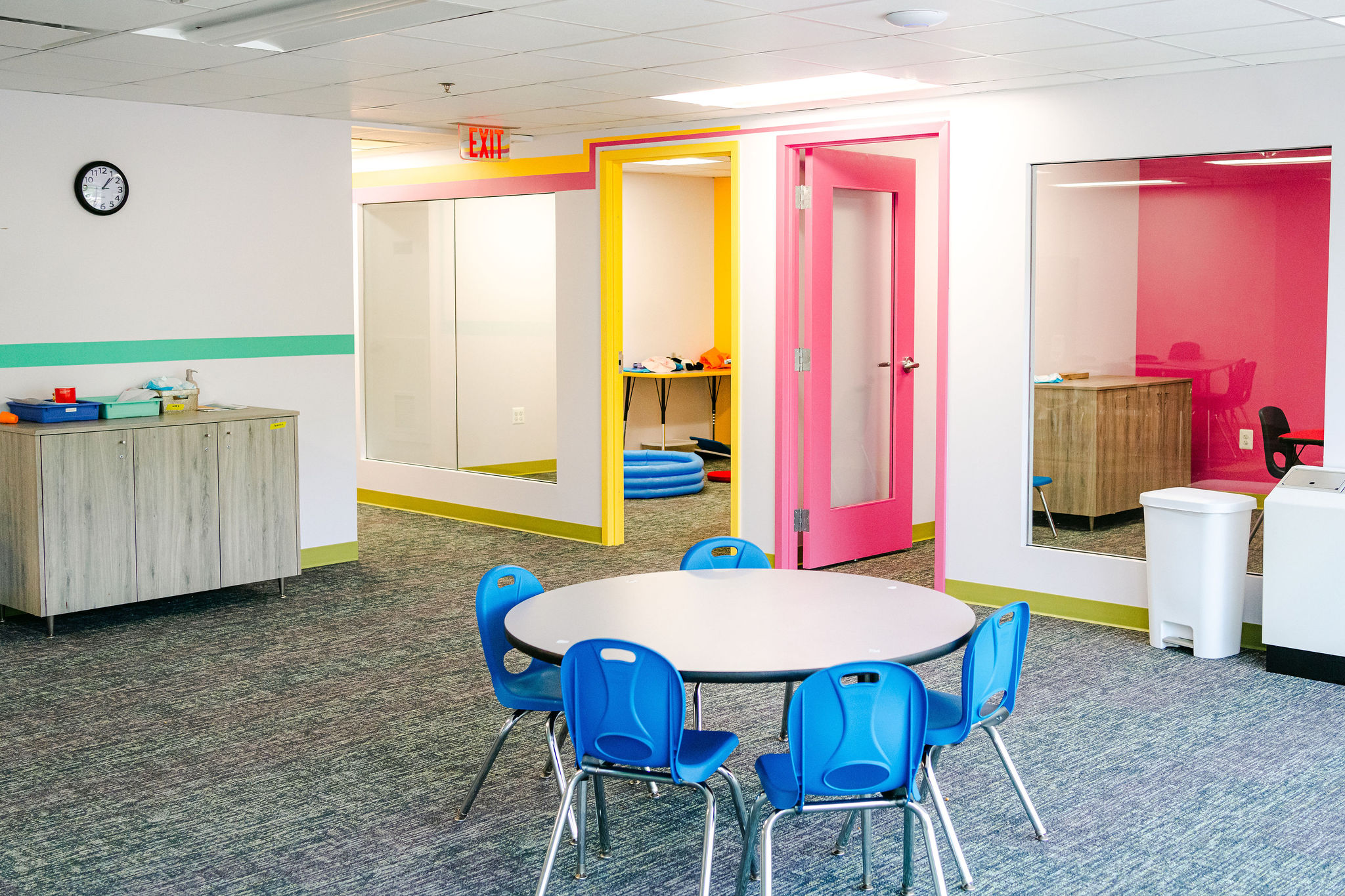
Designing an autism therapy center is more than finding the right building—it’s about creating an environment that actively supports learning, regulation, and daily routines. Thoughtful design decisions can reduce stress, reinforce therapy goals, and help children and staff feel supported throughout the day.
At Interplan, we work closely with clients to design autism therapy centers that balance program requirements, building constraints, and real-world functionality. The most successful projects begin with early planning, and a clear understanding of how a space needs to perform—both now and in the future.

Autism therapy programs often require a mix of classrooms, therapy spaces, and support areas—each with its own spatial and infrastructure needs. Defining the program early helps guide decisions about space planning, layout, and site selection, and ensures a potential building can realistically support how the center will operate.
Early planning should consider:
· The ages of the children served
· Enrollment size and staff-to-student ratios
· Types of therapy and learning environments required
· Whether services such as occupational or speech therapy will be provided onsite
· Support spaces needed for staff, storage, food preparation, and daily operations
· Will guardians remain on premises or leave the site during services rendered
Taking the time to define the program first helps ensure the selected site can truly support the center’s mission—not just today, but as it grows.
Not all commercial spaces are suitable for autism therapy centers. Location, aesthetics, building type, code requirements, and existing infrastructure play a major role in determining feasibility.
Certain building types—such as stand-alone buildings, industrial, or flex spaces—are often more adaptable for therapy and child-focused environments. Office buildings may also be viable, but often require additional considerations, such as fire-rated separations between the center and adjacent tenants.
Key building and code considerations include:
Fire Protection and Life Safety: Buildings should be fully protected by appropriate fire alarm and notification systems to meet jurisdictional requirements and ensure the safety of students and staff. Egress paths, corridor layouts, and life safety features must align with the center’s occupancy classification and program needs.
Licensing and Jurisdictional Requirements: Regulations vary by state and locality and often exceed baseline building code requirements. Designing to the most restrictive applicable standards is essential for approvals, inspections, and licensing.
HVAC and Indoor Air Quality: Therapy environments benefit from systems that provide proper fresh air, individual zone control, and stable temperature conditions. Mechanical equipment should be safely located and inaccessible to children.
Plumbing Infrastructure: Child-scaled plumbing fixtures, appropriate fixture counts, and drinking fountains at compliant heights are often required and should be verified early to avoid costly upgrades later.
Electrical and Low-Voltage Systems: Tamper-resistant outlets, coordinated fire alarm devices, controlled entry systems, and security considerations all need to be thoughtfully integrated into the design.
Building Type and Location: Ground-floor spaces with direct exterior access are often preferred for ease of arrival, departures, and daily operations. Certain building types are more adaptable to therapy environments, while others may introduce limitations that are difficult or costly to overcome.
Engaging with an experienced Architect and evaluating these conditions before a lease is signed helps avoid redesigns, delays, or long-term constraints that could affect the success of the center.

Supportive autism therapy centers feel structured, calming, and intuitive—without becoming overly clinical. These environments are created through a combination of thoughtful planning decisions that work together to support comfort, focus, and predictability.
Key design considerations include:
Lighting: Comfortable, controllable lighting helps reduce overstimulation and allows spaces to adapt throughout the day. Minimizing glare and avoiding harsh or inconsistent light sources contributes to a calmer environment.
Acoustics: Sound-conscious planning—through layout, separation of spaces, and material selection—can significantly reduce background noise and distraction, supporting focus and engagement.
Thoughtful sensory balance: Small design decisions can have a meaningful impact on how a space is experienced. Considering how materials, colors, textures, and environmental cues work together helps create environments that feel comfortable, supportive, and easy to navigate.
Clear organization and flow: Spaces that are easy to understand help reduce anxiety. Logical adjacencies, intuitive circulation, and clear distinctions between activity types support routine and predictability.
Material and furniture selection: Durable, comfortable materials that are easy to maintain support daily use while creating a welcoming, non-institutional feel.
Flexibility and choice: Therapy environments benefit from spaces that allow children to transition between activities, access quieter areas when needed, and engage at different comfort levels. Designated calming or retreat spaces support self-regulation, while adaptable rooms allow programs to evolve over time.
Balancing structure with flexibility allows autism therapy centers to meet a wide range of needs today while remaining adaptable for the future.
Designing an autism therapy center requires collaboration, experience, and a clear understanding of how program goals, building requirements, and user experience intersect. Early planning and coordination help create spaces that are compliant, functional, and supportive of both children and staff.
At Interplan, we guide clients through the design process with clarity and confidence—from early site evaluation and code review to space planning and material selection. Our experience designing healthcare and child-focused environments allows us to create autism therapy centers that are thoughtfully designed, practical to operate, and built to support meaningful outcomes.
If you’re planning an autism therapy center and looking for a design partner who understands both the technical requirements and the day-to-day realities of these spaces, Interplan is here to help.